


Why We Never Notice Ourselves Ageing….
Until We Suddenly Do
The science and psychology behind why ageing often feels like it happens overnight – and what you can do to feel like yourself again
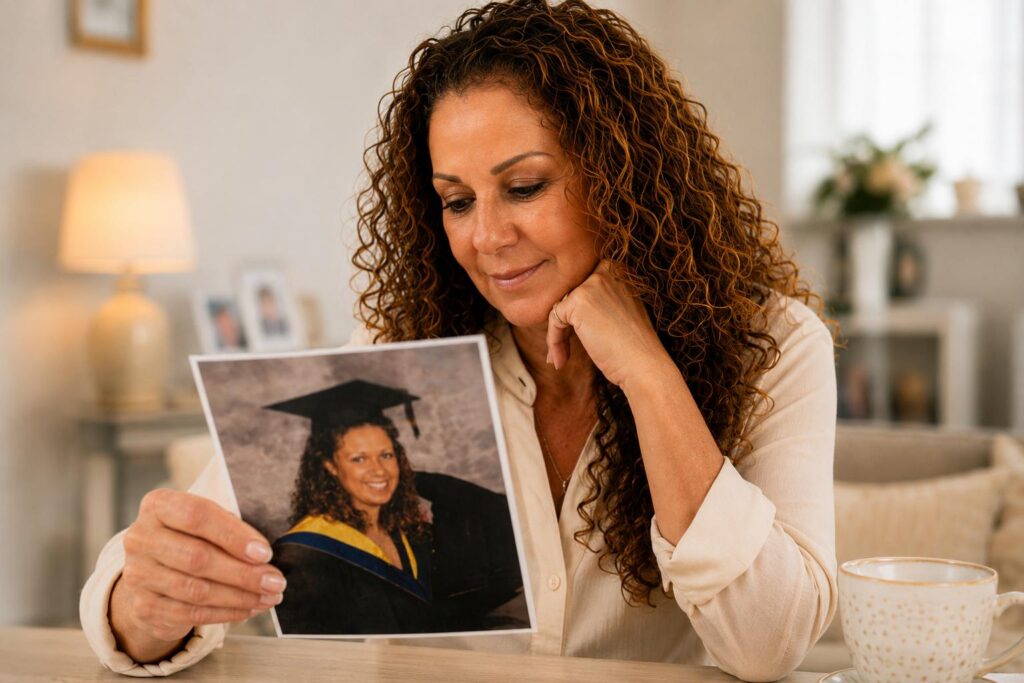
Have you ever looked at a photograph of yourself and thought:
“When did I start looking old?”
It’s a question many women ask themselves, often quietly and sometimes with a degree of shock.
The strange thing is that ageing rarely happens overnight. Yet for many people, it can feel exactly that way.
One day, you feel exactly as you always have. Then you catch your reflection in a shop window, see a candid photograph, or join a video call and suddenly feel that the face looking back at you doesn’t quite match the person you feel yourself to be.
As a medical aesthetics practitioner, this is one of the most common conversations I have with patients. Not because they want to look younger, but because they feel they’ve somehow lost the version of themselves they recognise.
But why does this happen?
1. Your Brain Doesn’t Notice Gradual Change
Human beings are remarkably poor at detecting slow changes in their own appearance.
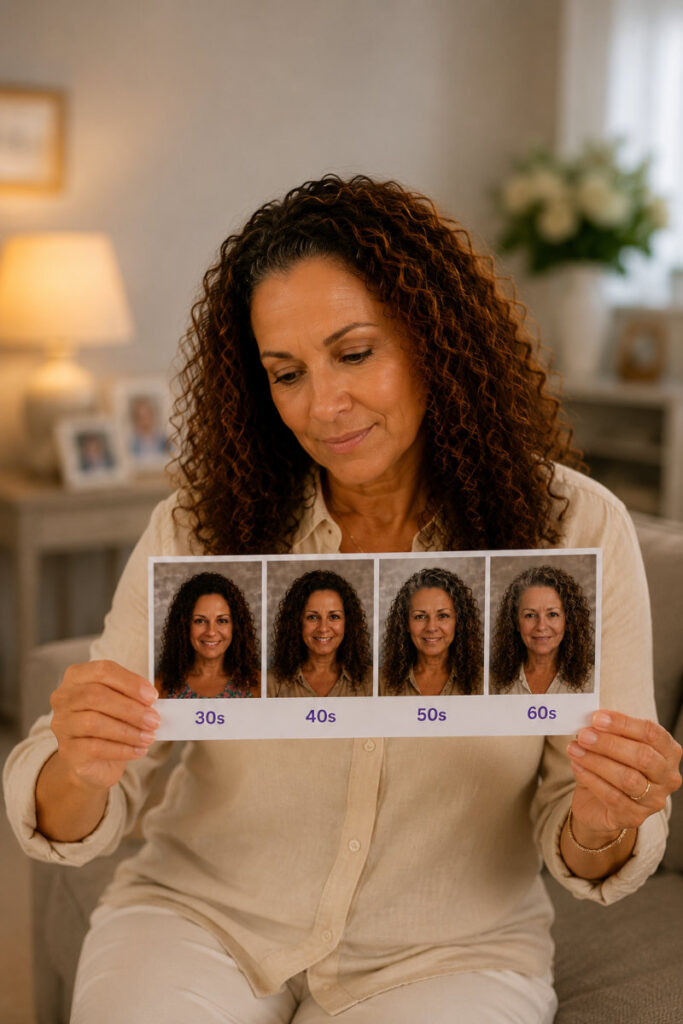
Our brains constantly update our internal image of ourselves. Because we see our faces every day, tiny changes in skin quality, facial structure and volume loss are absorbed gradually into our perception of who we are.
This phenomenon is known in psychology as change blindness.
It’s the same reason parents don’t notice how much their children have grown until they compare photographs from years apart. Our brains prioritise continuity over difference.
Until suddenly, they don’t.
2. Why Photographs Can Be Such A Shock
Many people describe a particular photograph as the moment they first realised they had aged.
Perhaps it was a family wedding, a holiday photo or an unexpected picture taken by someone else.
Photographs remove many of the factors that help us maintain our internal self-image:
- familiar lighting,
- facial expressions,
- preferred angles,
- movement,
- and the version of ourselves we expect to see.
Instead, we are confronted with an objective snapshot that our brains haven’t had time to adjust to.
This can create a disconnect between how we feel internally and what we perceive externally.
3. Why Midlife Can Feel Like Ageing Happens Overnight
Women particularly, the period between our late forties and sixties can feel as though ageing suddenly accelerates.
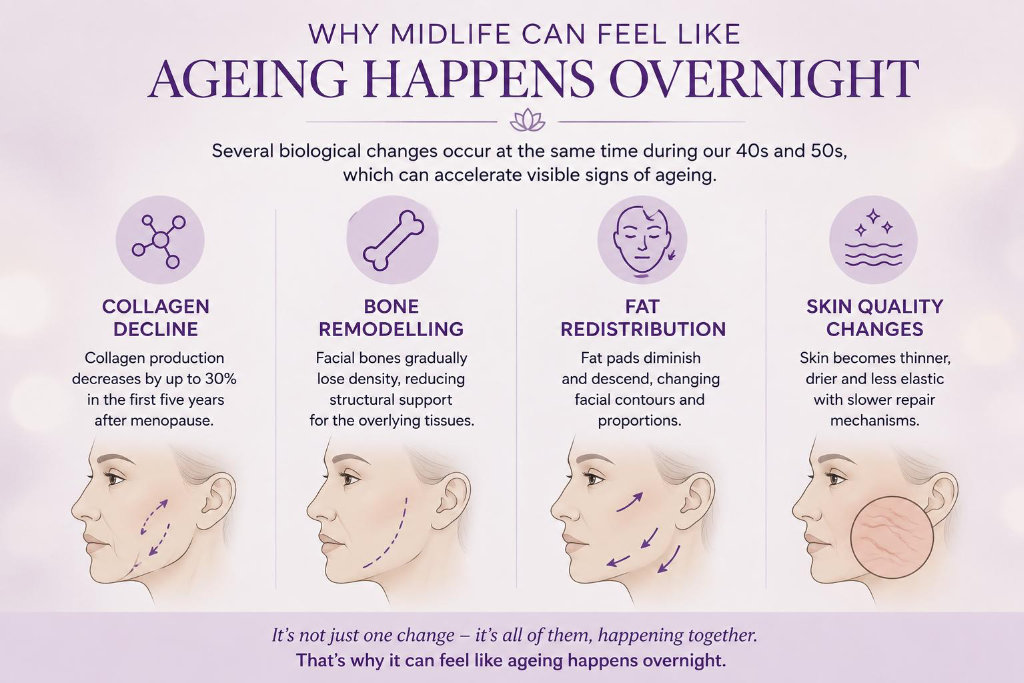
In reality, several biological processes are occurring simultaneously:
Collagen production declines. After the age of 30, collagen production decreases by approximately 1% per year. During menopause, women can lose up to 30% of their skin collagen within the first five years.
Bone structure changes. The facial skeleton gradually remodels over time, reducing structural support to the overlying tissues.
Facial fat compartments shift. The fat pads that create youthful contours begin to descend and diminish, changing facial proportions.
Skin quality changes. The skin becomes thinner, drier and less elastic, with slower repair mechanisms.
Lifestyle factors accumulate. Stress, sleep deprivation, sun exposure, illness and major life events can all accelerate visible ageing.
When several of these factors occur together, it can genuinely feel as though ageing happened almost overnight.
4. It’s Rarely About Looking Younger
One of the biggest misconceptions about medical aesthetics is that people simply want to look younger.
In my experience, this is rarely the case.
Patients are much more likely to say:
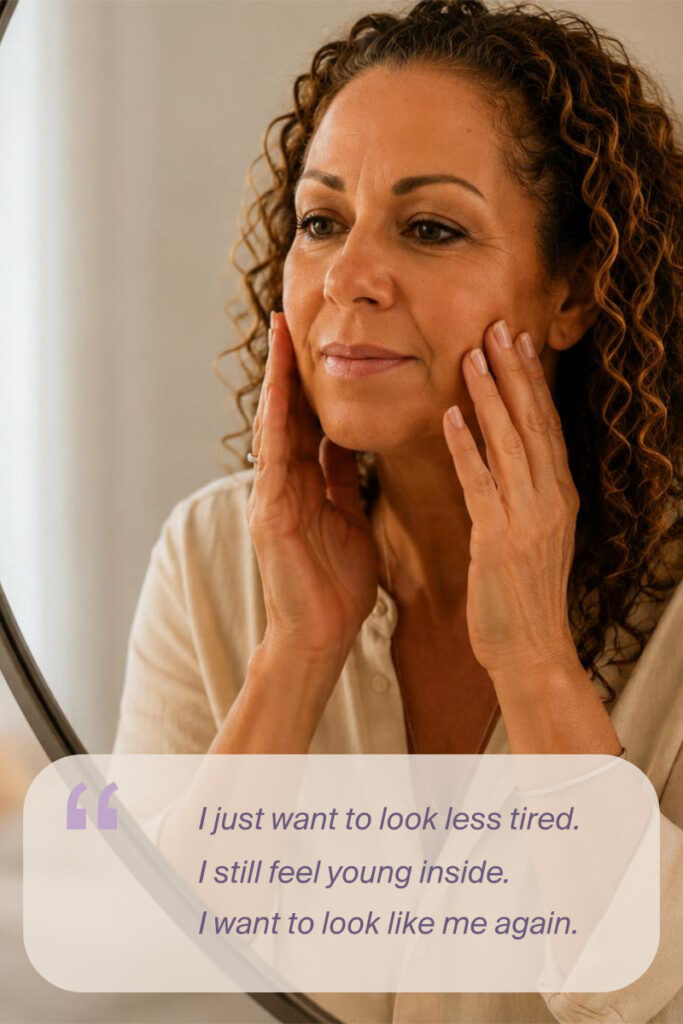
- “I just want to look less tired.”
- “I don’t recognise myself anymore.”
- “I still feel young inside.”
- “I want to look like me again.”
These are not expressions of vanity.
They reflect a very human desire for our external appearance to align with our internal identity.
5. The Goal Isn’t To Turn Back Time
At Age with Elegance, my philosophy has never been about chasing youth.
The goal of modern medical aesthetics should not be to create a different face or erase every sign of ageing.
Instead, the focus should be on supporting healthy skin, restoring structural integrity where appropriate, encouraging collagen production and helping patients feel that the person they see in the mirror reflects how they feel inside.
Ageing is inevitable.
Feeling disconnected from yourself doesn’t have to be.
If you’ve ever looked in the mirror and wondered when everything changed, please know that you’re not alone.
The reality is that it probably didn’t happen overnight at all.
You simply noticed.
Cath